
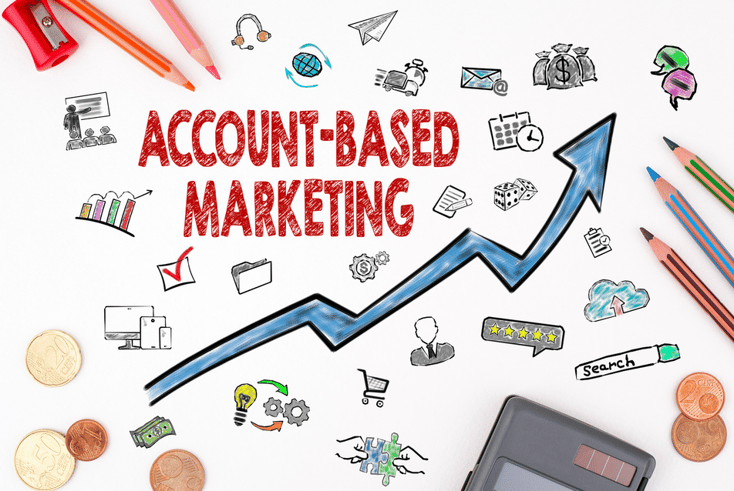
 Effective account-based marketing (ABM) requires tight alignment between sales and marketing, precise account selection, and personalized messaging tailored to each stakeholder. B2B businesses that succeed with ABM focus on quality over quantity, treating a handful of high-value accounts like individual markets rather than blasting generic campaigns across a broad audience.
What Makes Account-Based Marketing Different From Traditional B2B Marketing?
Traditional marketing works like a funnel: attract as many leads as possible, then narrow them down. ABM reverses this. You start with a list of your most sought-after accounts and build campaigns around their specific needs, challenges, and buying committees.
This distinction matters because B2B purchases rarely involve a single decision-maker. ABM accounts for this complexity by targeting multiple stakeholders within the same organization, rather than treating each contact as an isolated lead.
How Do You Choose The Right Accounts For ABM?
Account selection is the basis of any ABM strategy. Get this step wrong, and even the best-executed campaign will fall flat.
Start by looking at your existing customers. Which accounts generate the most revenue? Which ones churn the least? Build your ideal customer profile based on firmographic data like company size, industry, and revenue, along with behavioral signals like website engagement or content downloads.
From there, work with your sales team to shortlist accounts that match your ICP and show intent signals, such as visiting pricing pages or engaging with competitor comparisons. Sales reps often have insight into which accounts are a good cultural or strategic fit, so their input is invaluable here.
Why Does Sales And Marketing Alignment Matter So Much In ABM?
ABM cannot work in a silo. Because it targets specific accounts rather than broad audiences, marketing and sales need to agree on who to target, what message to send, and when to send it.
Set up a shared workflow where sales and marketing meet regularly to review target accounts, share intelligence, and adjust tactics. Use a shared CRM so both teams can track account engagement in real time.
How Do You Personalize Content For Each Target Account?
Generic content doesn't cut it in ABM. Personalization needs to go beyond swapping in a company name in an email subject line.
Effective personalization means addressing the specific pain points of an account's industry, referencing their business goals, and speaking to the individual roles of each stakeholder involved in the buying decision. A CFO cares about ROI and cost savings. A CTO cares about integration and security. Your content should reflect those differing priorities, even within the same account.
Which Channels Work Best For Reaching Target Accounts?
ABM works best as a multi-channel effort. Relying on a single channel, like email, limits your reach and makes it easier for your message to get lost. Combine channels based on where your target accounts spend their time:
-
LinkedIn ads to reach specific job titles within your target accounts
-
Personalized email sequences timed around key buying triggers
-
Direct mail for high-value accounts, which still stands out in an inbox-saturated world
-
Retargeting ads to stay visible as prospects move through the buying journey
-
Sales outreach informed by marketing engagement data
The goal is consistency. A stakeholder should recognize your brand whether they're scrolling LinkedIn or opening their inbox.
How Long Does It Take To See Results From Account-Based Marketing?
ABM is a long-game strategy. Because it targets complex, multi-stakeholder deals, results often take longer to materialize than traditional lead generation campaigns. Many B2B businesses see meaningful pipeline impact within six to twelve months, though this varies depending on deal complexity and sales cycle length.
Choose ABM if your business sells high-value, complex solutions with lengthy sales cycles and multiple decision-makers. It's less suited for low-cost, high-volume transactions where a broader demand generation strategy will likely perform better.
How Do You keep ABM Campaigns From Feeling Repetitive To Target Accounts?
Even the best-targeted campaign can grow stale if a stakeholder sees the same message across every channel. Build in variation by rotating content formats, such as alternating between case studies, short videos, and interactive tools. Update messaging as the account moves through different stages of the buying journey, shifting from educational content early on to more solution-specific messaging as they approach a decision.
Start Small, Then Scale Your ABM Strategy
Account-based marketing rewards precision over scale. Rather than trying to run ABM campaigns across hundreds of accounts right away, start with a pilot program targeting 10 to 20 high-value accounts. Use this smaller batch to test messaging, refine your sales and marketing workflows, and prove ROI before expanding further.